Learning Outcomes
Toddlers Using Tablets: How they Engage, Play and Learn
A study into how sessions on educational learning apps compares with solo sessions, with parents and passive video content.
Frontiers · 2021-05-31
Summary
This study examines how toddlers engage with tablet-based activities, exploring the educational and developmental potential of touch-based technology.
Key Findings
High Engagement Levels:
Toddlers demonstrated extended focus and engagement when using tablet applications designed for their age group.
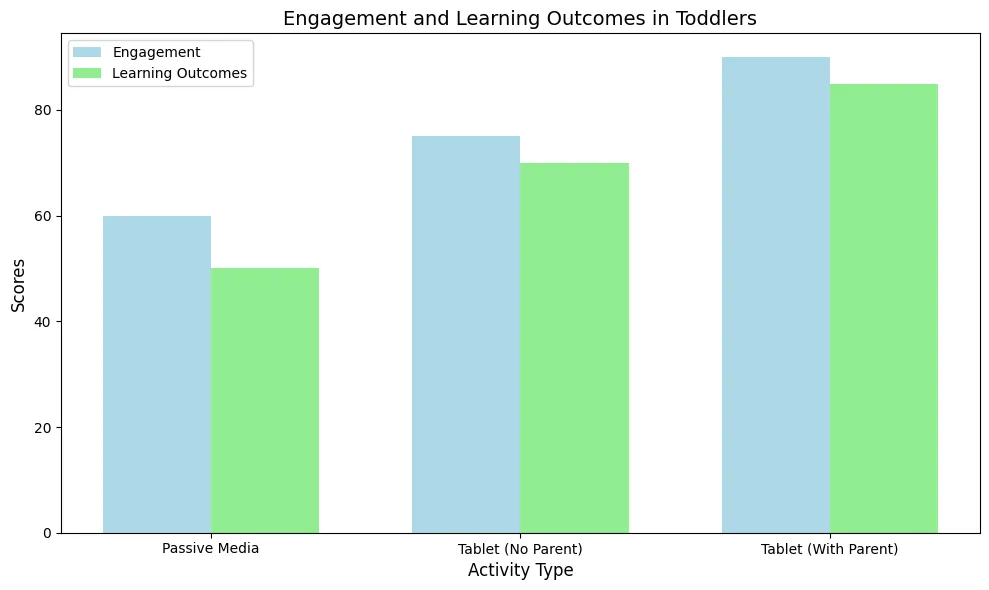
Interactive features, such as drag-and-drop and touch-to-animate, significantly increased attention spans compared to passive media like television.
Learning Outcomes:
Educational apps improved problem-solving skills and vocabulary acquisition in toddlers.
However, the absence of parental involvement diminished these benefits.
Role of Play:
Tablet-based activities that incorporated play elements (e.g., puzzles, games) fostered exploratory behavior and creativity.
The bar chart compares engagement and learning outcomes for toddlers interacting with passive media (e.g., TV) versus tablet-based activities, with and without parental involvement. It highlights the added value of interactive features and parental support.
Participants: 150 toddlers aged 18–36 months.
Methodology: Observational sessions where toddlers interacted with tablet-based apps. Outcomes were assessed using attention measures and problem-solving tasks.
Implications: When used appropriately, tablets can be a valuable tool for enhancing toddlers’ learning and engagement. Parental involvement is essential to maximize benefits and prevent overuse.

Built on the same research you're reading.
KidSafeTV — No addictive algorithms, no brainrot. Just approved content that ends calmly.