Child Psychology
Reality Vs Fantasy Judgments of Digital Media
Children’s Reality Status Judgments of Digital Media
Frontiers in Psychology · 2020-11-05
Summary
This study explores how children differentiate between real and fictional elements in digital media, a critical skill in an era dominated by virtual content.
Key Findings
Difficulty With Fictional Content:
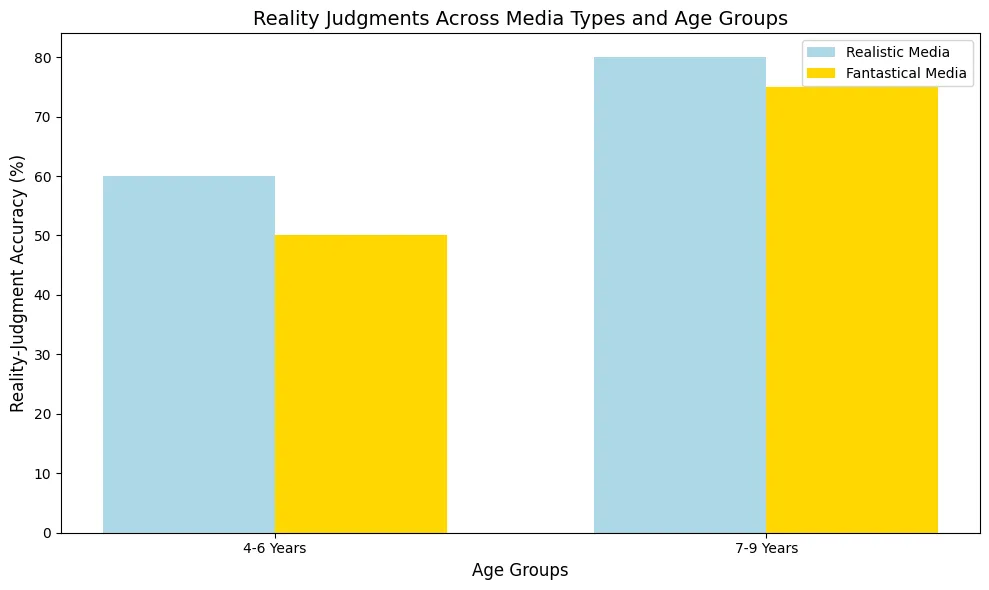
Younger children (4–6 years) struggled more to identify fictional elements in digital media compared to older children (7–9 years).
Context Matters:
Realistic settings in media increased confusion about reality status, particularly for fantastical characters in real-world environments.
Parental Mediation Helps:
Discussing media content with parents improved children’s ability to differentiate between real and fictional elements.
The bar chart compares reality-judgment accuracy scores across age groups and media types.
Participants: 150 children aged 4–9.
Methodology: Children watched digital media clips featuring both realistic and fantastical elements. They were then asked to classify elements as real or fictional.
Implications:
Parents and educators should guide children in evaluating digital content critically, particularly in contexts where fantasy blends with reality.

Built on the same research you're reading.
KidSafeTV — No addictive algorithms, no brainrot. Just approved content that ends calmly.