Parental Guidance
Background Television for Babies
When babies watch television: Attention-getting, attention-holding, and the implications for learning from video material
Science Direct · 2010-03-31
Summary
This study examines how background television affects the quality and quantity of parent–child interactions, shedding light on the potential implications of ambient media exposure in the home environment.
Key Findings
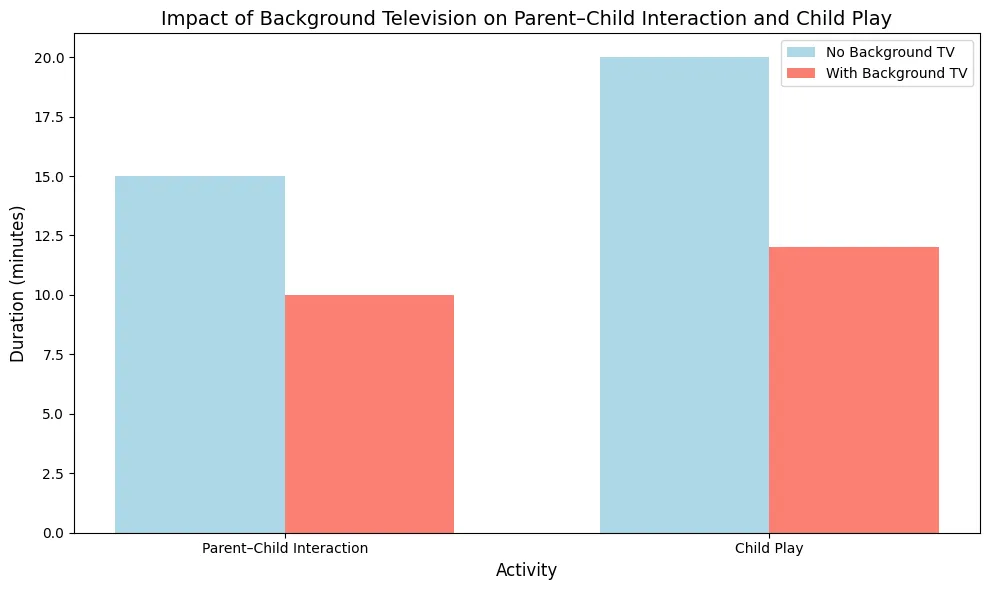
Reduced Interaction Quality: The presence of background television led to shorter and less frequent parent–child interactions.
Decreased Parental Engagement: Parents were less responsive and engaged in fewer play behaviors with their children when background television was on.
Child Play Behavior: Children's play was less focused and shorter in duration in the presence of background television.
The bar chart illustrates the average duration of parent–child interactions and children's play episodes with and without background television.
Participants: 50 children aged 12, 24, and 36 months, along with their parents.
Methodology: Parent–child dyads were observed during free-play sessions with and without background television.
Implications: The findings suggest that background television can disrupt parent–child interactions and children's play behavior. Minimizing background media exposure may promote more effective parental engagement and support children's focused play.

Built on the same research you're reading.
KidSafeTV — No addictive algorithms, no brainrot. Just approved content that ends calmly.