Media Effects
Effects of screen time on emotion regulation and academic performance
A three-wave longitudinal study on children from 4 to 8 years of age
Sage Journals · 2020-12-06
Summary
This study investigates the longitudinal effects of screen time on emotion regulation and academic achievements in young children, providing insights into how early exposure to digital devices may influence developmental outcomes.
Key Findings
Emotion Regulation:
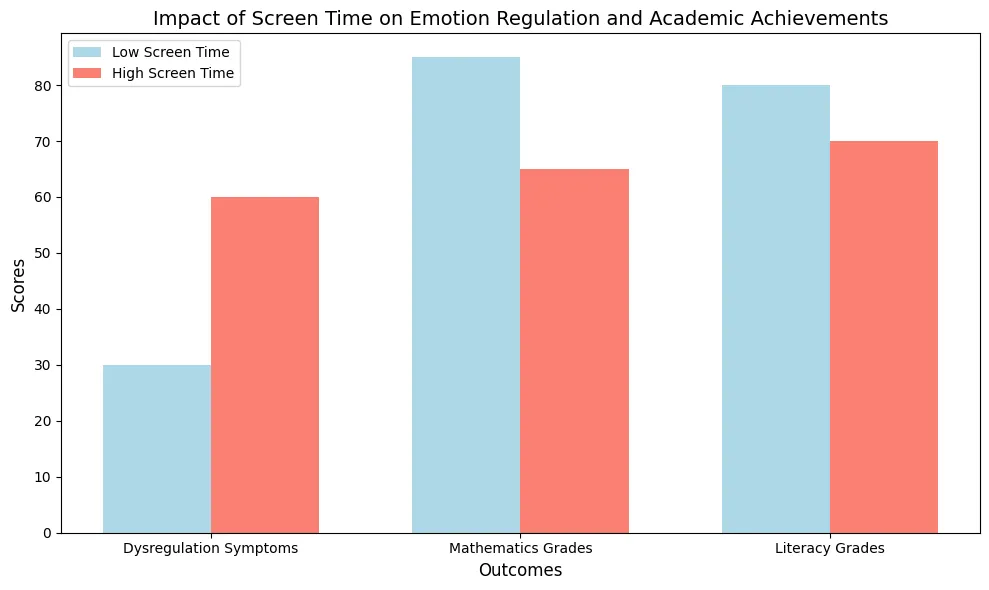
Increased screen time at 4 years of age was associated with higher levels of dysregulation symptoms, such as mood swings and attention difficulties, at ages 6 and 8.
Academic Achievements:
Higher screen time at age 4 negatively correlated with mathematics and literacy grades at age 8.
Parental Involvement:
Active parental participation during children's screen time did not significantly mitigate the negative effects on emotion regulation and academic performance.
The bar chart illustrates the relationship between screen time at age 4 and subsequent dysregulation symptoms and academic achievements at ages 6 and 8.
Participants: 422 children and their mothers, with assessments conducted at ages 4, 6, and 8.
Methodology: Mothers reported their children's screen time and emotional/behavioral functioning; teachers provided evaluations of academic achievements and dysregulation symptoms.
Implications: The findings suggest that excessive screen time in early childhood can have lasting negative effects on emotional regulation and academic success. Limiting screen exposure during formative years is recommended to promote healthier developmental outcomes.

Built on the same research you're reading.
KidSafeTV — No addictive algorithms, no brainrot. Just approved content that ends calmly.